
Project Gallery
Large Industrial Injection Moulding Machine
Description
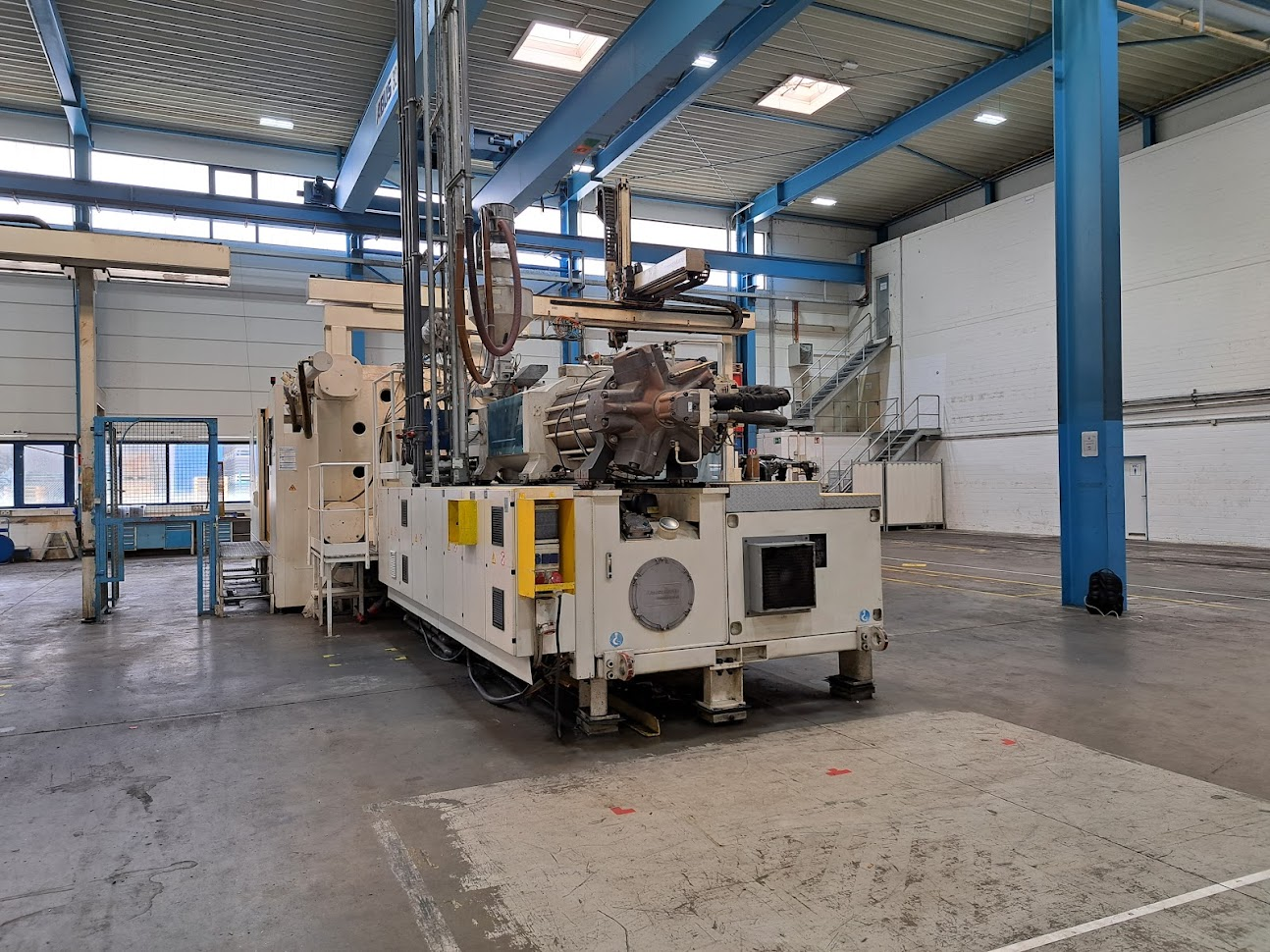
This is a large industrial injection moulding machine designed for high-capacity plastic processing and automated manufacturing operations. The machine features a heavy-duty construction with a substantial processing unit, hydraulic operating systems, electrical control equipment, material-handling components, and an integrated machine frame designed for continuous industrial production. The machine is installed in a spacious industrial manufacturing facility and is configured as a complete production system rather than a standalone compact workshop unit. Its large structural frame provides the rigidity required for industrial processing, while the integrated mechanical, hydraulic, electrical, and control components work together to perform repeatable manufacturing cycles. The central section of the machine contains the main injection and processing assembly, which is responsible for preparing and transferring molten polymer material into the moulding area under controlled conditions. The heavy cylindrical and hydraulic components form an important part of the machine's operating mechanism, providing the force and controlled movement required during the injection and moulding process. A major feature of the machine is its substantial hydraulic system. Multiple hydraulic cylinders, hoses, valves, fittings, and associated components are integrated into the machine. Hydraulic power allows the machine to generate and control the significant forces required during mould closing, injection, and other machine movements. The hydraulic arrangement is particularly important for maintaining controlled and repeatable production cycles in large industrial moulding operations. The machine incorporates a large clamping and moulding area, where the mould assembly is positioned during production. The clamping mechanism provides the necessary force to hold the mould securely together during injection. Once the plastic material is injected into the mould cavity and the required cooling and solidification process has taken place, the mould can be opened to allow the finished component to be removed. The injection unit is mounted on a robust machine structure and contains several mechanical and hydraulic elements associated with material preparation and injection. The arrangement is designed to deliver processed plastic material into the mould under controlled pressure and movement. The heavy construction of the injection assembly supports stable operation during repeated production cycles. The machine also contains extensive electrical and control equipment integrated into its lower housing. Electrical cabinets, control components, ventilation sections, wiring, connectors, and service access areas are incorporated into the machine body. These systems provide the electrical infrastructure required for operating the machine's motors, pumps, sensors, valves, heating systems, safety circuits, and automated functions. The large enclosed lower section protects many of the machine's electrical and mechanical components while also providing access for maintenance and servicing. Ventilation openings and cooling components help manage the operating temperature of the internal equipment. Proper thermal management is important for maintaining reliable operation during extended industrial production. The machine is equipped with numerous cables, hydraulic hoses, and flexible connections routed between fixed and moving sections. These connections allow the machine's different assemblies to operate while maintaining organized power, control, hydraulic, and auxiliary services. The routing arrangement is particularly important in a machine with multiple moving components because it reduces interference and helps protect the connections during repeated machine cycles. A substantial overhead support and movement arrangement is also integrated into the production setup. This provides controlled movement for associated machine components and supports the handling of tooling or production assemblies around the main machine. The combination of the machine structure and supporting handling equipment makes the installation suitable for a production environment where moulds, tooling, and other heavy components may need to be positioned accurately. The machine's large physical footprint provides the necessary space for industrial production and maintenance access. Its rigid base and support points allow the equipment to remain securely positioned during operation. Heavy-duty support feet are visible beneath the machine, providing stable contact with the factory floor and helping maintain the machine's alignment. The surrounding production hall provides considerable working space around the equipment, allowing operators and maintenance personnel to access different sides of the machine. The facility includes overhead structural beams, lifting infrastructure, large windows, industrial flooring, service areas, and dedicated production zones. This type of environment supports large-scale manufacturing and equipment maintenance activities. The machine is particularly suitable for the production of large and technically demanding plastic components where controlled injection, mould clamping, cooling, and part removal are required. Injection moulding technology is widely used for producing repeatable plastic components with consistent dimensions and surface characteristics. Depending on the installed tooling and processing configuration, machines of this type can support applications across automotive, industrial equipment, consumer products, electrical components, packaging, and other manufacturing sectors. The machine's hydraulic architecture allows the production process to be divided into controlled stages. Plastic material is prepared within the processing system, transferred toward the injection section, injected into the mould under controlled conditions, and held while the material forms the required shape. The mould then opens and the finished component can be removed before the next production cycle begins. A large industrial machine such as this can be integrated into an automated production line together with material feeding systems, temperature-control equipment, mould-temperature systems, conveyors, robots, part-removal equipment, and other auxiliary machinery. Such integration allows production operations to be organized around repeatable cycles and can reduce manual intervention during high-volume manufacturing. The machine's substantial construction also provides the mechanical stability necessary for maintaining consistent moulding performance. During injection, considerable forces are generated within the mould and clamping system. The rigid machine frame and hydraulic mechanisms work together to control these forces and maintain the required alignment between the mould halves. Maintenance accessibility is another important characteristic of the machine. Electrical panels, hydraulic components, hoses, service covers, ventilation areas, and mechanical assemblies are positioned throughout the equipment to allow inspection and servicing. Regular maintenance of hydraulic systems, lubrication points, electrical components, heating systems, sensors, seals, and moving assemblies is essential for maintaining reliable production performance. The overall configuration represents a heavy-duty industrial plastic processing installation, combining the main injection unit, hydraulic power system, clamping mechanism, electrical systems, control infrastructure, material-processing components, and supporting mechanical assemblies into one integrated manufacturing machine. With its large machine frame, powerful hydraulic operating system, substantial injection assembly, dedicated clamping area, electrical control infrastructure, and industrial-scale installation, this equipment is designed for demanding production environments where reliable and repeatable plastic moulding is required. Its configuration provides the foundation for processing thermoplastic materials into moulded components using dedicated tooling. The machine's industrial design also allows it to accommodate substantial mould tooling and production assemblies. Appropriate mould selection, material characteristics, processing temperatures, injection parameters, clamping requirements, and cycle settings determine the final production capability of the machine.