
Project Gallery
Heavy-Duty Milling Machine
Description
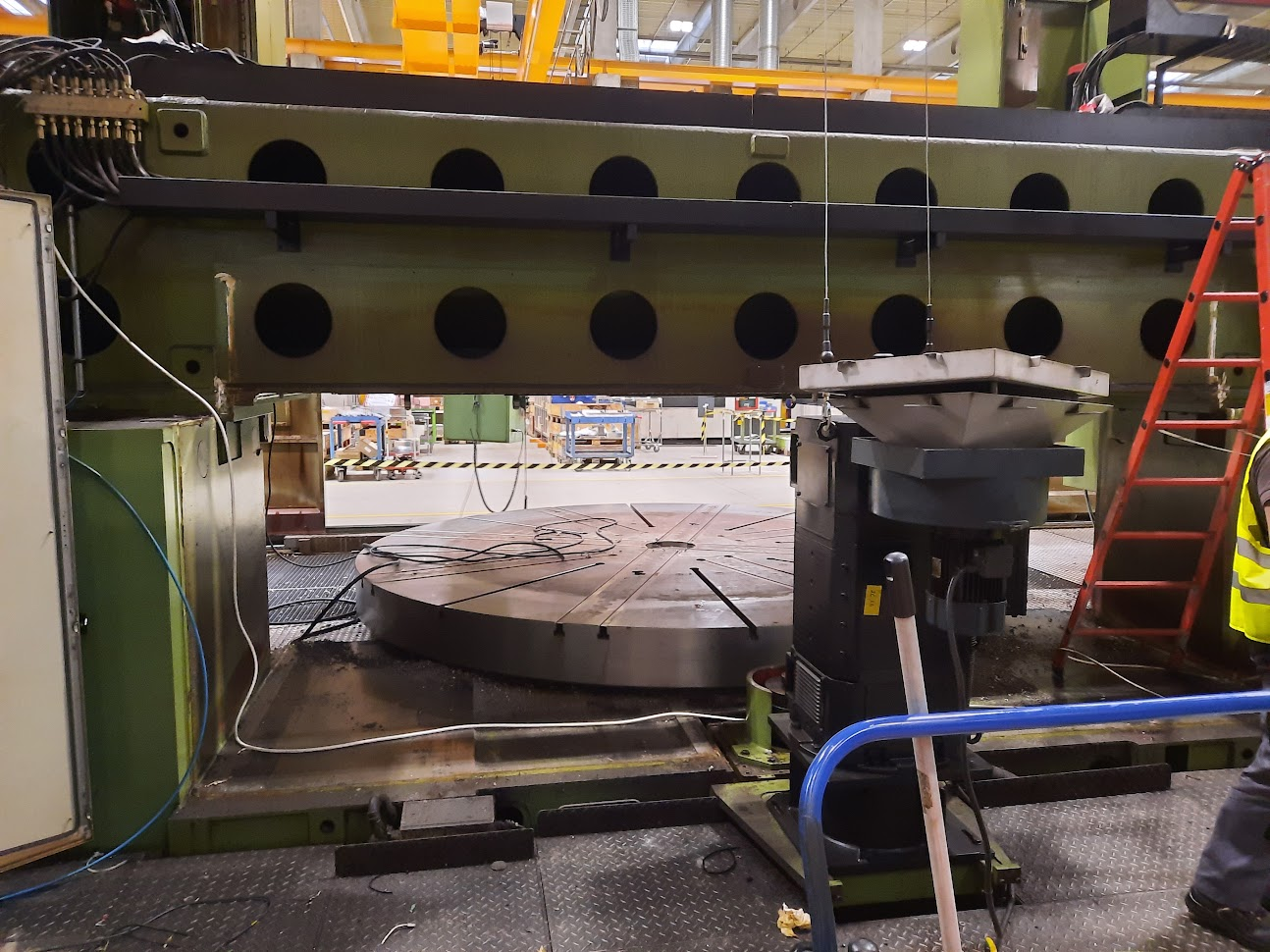
This is a heavy-duty CNC vertical turning and milling machine designed for machining large and heavy industrial components. The machine combines a large-diameter horizontal rotary table with a substantial vertical machining structure, allowing workpieces to be securely positioned and processed using controlled turning, milling, drilling, and related machining operations. Its configuration is particularly suited to large components that require substantial workholding capacity and access from above. The machine is built around a rigid vertical machining structure with a large horizontal working table positioned at the center of the machine. The rotary table provides the primary workholding surface and is designed to rotate the workpiece around a vertical axis. This arrangement is characteristic of vertical turning equipment, where large-diameter and heavy components can be mounted directly onto the table rather than being supported between conventional horizontal lathe centers. The large circular table incorporates multiple radial and circumferential T-slots for securing workpieces, fixtures, clamping devices, and specialized tooling. These slots provide flexibility when positioning components of different sizes and geometries. Heavy industrial workpieces can be securely clamped to the table before machining operations begin, allowing the machine to maintain controlled positioning throughout the production cycle. The machine's vertical configuration provides an important advantage when processing large components. The workpiece is supported from below by the rotary table while the machining tools approach from above. This arrangement is particularly suitable for components with large diameters, substantial weights, and relatively low or moderate heights. A large overhead crossbeam spans the machining area and carries the primary tool-supporting assembly. The crossbeam provides a rigid structural foundation for the machine's horizontal movement system and allows the tooling assembly to be positioned across the workpiece. The substantial construction of the beam helps provide the rigidity required for heavy-duty material removal. The machine incorporates a vertical tool carriage mounted to the main crossbeam. This carriage provides controlled movement toward and away from the workpiece and supports the cutting tools required for machining. The combination of horizontal and vertical movement allows the cutting tool to reach different areas of the component mounted on the rotary table. A dedicated machining head/tool assembly is positioned on the vertical carriage. The configuration allows the machine to perform controlled cutting operations while the workpiece rotates on the main table. Depending on the installed tooling and programmed operation, the machine can be used for turning, facing, boring, drilling, milling, and other machining processes. One of the most significant characteristics of this machine is its combined turning and milling capability. The control panel includes clearly identified functions corresponding to turning and milling operations, supporting the machine's multi-purpose machining configuration. This allows a large component to undergo multiple machining processes on a single machine platform, reducing the need for repeated workpiece transfers between separate machines. The machine is equipped with a GE Fanuc Series 16-T CNC control system. The Fanuc control provides the machine with a programmable numerical-control interface for coordinating axis movements, machining cycles, spindle/table rotation, tool movements, and other machine functions. The control panel includes a dedicated display, numerical keypad, machine-operation controls, axis controls, selector switches, feed controls, and emergency-stop functions. The GE Fanuc Series 16-T control is an established CNC control platform used across industrial machine tools for programmed machining operations. The control interface provides the operator with access to machine parameters, program operation, axis positioning, machining commands, and manual control functions. This enables the machine to be operated using programmed CNC cycles as well as manual and setup functions where appropriate. The control panel also incorporates dedicated digital displays and machine-status indicators. These provide the operator with information relating to machine operation and axis functions. The panel includes separate controls for machine movement, automatic operation, manual operation, and emergency stopping, allowing operators to manage different stages of the machining process. The machine's substantial electrical control cabinet and associated wiring provide the infrastructure required for the CNC system, drive motors, sensors, switches, and auxiliary equipment. The electrical system works together with the CNC controller to coordinate the mechanical movements of the rotary table and tool-supporting assemblies. The rotary table is supported by a heavy machine foundation designed to accommodate the forces generated during machining. Large components can be positioned on the table and securely clamped before machining begins. The table's large diameter and extensive T-slot arrangement provide considerable flexibility for industrial workholding. The machine's construction is particularly suitable for large-diameter components. Typical applications for this type of vertical turning and milling configuration include large gears, rings, flanges, turbine components, bearing housings, wheels, discs, heavy shafts, industrial machinery components, energy-sector components, and other large circular or rotational parts. Vertical turning machines are especially useful when component diameter and weight become significant factors. Instead of requiring a long horizontal machine bed, the vertical arrangement allows the component to rest on a large rotating table. This can provide efficient workholding and convenient access for heavy components while keeping the machine footprint appropriate for large-scale machining. The machine's combined machining capability can also reduce handling requirements during production. A component can be mounted on the rotary table and subsequently undergo several operations without being removed from the machine. Turning and facing operations can be followed by drilling, boring, milling, or other operations depending on the tooling and machine configuration. This capability can be valuable when manufacturing components that require accurate relationships between multiple machined features. Keeping the component secured on the same rotary table during several operations can help maintain consistent positioning between machining processes and reduce the need for repeated setup. The heavy structural frame, crossbeam, vertical carriage, and rotary table work together to provide a rigid machining platform. Rigidity is particularly important in heavy-duty machining because large cutting forces can be generated when removing substantial quantities of material from large workpieces. The machine also incorporates extensive mechanical and electrical service connections around the moving assemblies. These connections provide power, control, lubrication, and other necessary services to the machine's moving components. Proper routing of these connections allows the tool carriage and other assemblies to move while maintaining reliable machine operation. The working area is designed around a large open machining zone, providing access for loading and unloading substantial components. The surrounding industrial installation includes supporting equipment, protective barriers, maintenance access areas, and industrial flooring appropriate for heavy machinery. The machine's design also supports practical maintenance and setup activities. Operators can access the control panel directly from the working area, while the machine structure provides service access to the major mechanical and electrical assemblies. Regular maintenance of the rotary table, drive systems, guideways, lubrication systems, electrical equipment, CNC controls, tooling assemblies, and workholding components is essential for maintaining machining accuracy and reliable operation. The GE Fanuc Series 16-T CNC system provides a programmable foundation for repeatable production. Once the appropriate CNC program, tooling, workholding arrangement, cutting parameters, and machining sequence have been established, the machine can perform repeated machining cycles with controlled axis movement and rotary-table operation. The machine is therefore well suited to manufacturing environments where large, heavy, rotationally symmetrical components require precision machining. Its vertical table arrangement provides substantial support for heavy workpieces, while the overhead machining structure provides controlled access to the component surface. The integrated turning and milling configuration further expands the machine's production capability. Rather than functioning solely as a conventional vertical lathe, the machine can support additional machining operations using suitable tooling and programmed movements. This makes it useful for complex components requiring several different machining processes. The machine's large work envelope and heavy construction make it appropriate for sectors such as heavy engineering, power generation, energy equipment, industrial machinery, transportation equipment, large bearing and gear manufacturing, and other industries producing oversized mechanical components. For large components, workpiece handling is an important part of the production process. The machine's open vertical configuration allows components to be positioned onto the rotary table using suitable overhead lifting equipment. Once positioned and securely clamped, the workpiece can be aligned and prepared for machining through the CNC control system. The machine's rotary table provides controlled rotation around the vertical axis, while the machining head and tool carriage provide the necessary linear movements. Coordinating these movements allows the machine to generate cylindrical surfaces, flat faces, bores, holes, pockets, profiles, and other machined features depending on the available tooling and CNC configuration.