
Project Gallery
Heavy-Duty Industrial Rotary Paddle Mixing Machine
Description
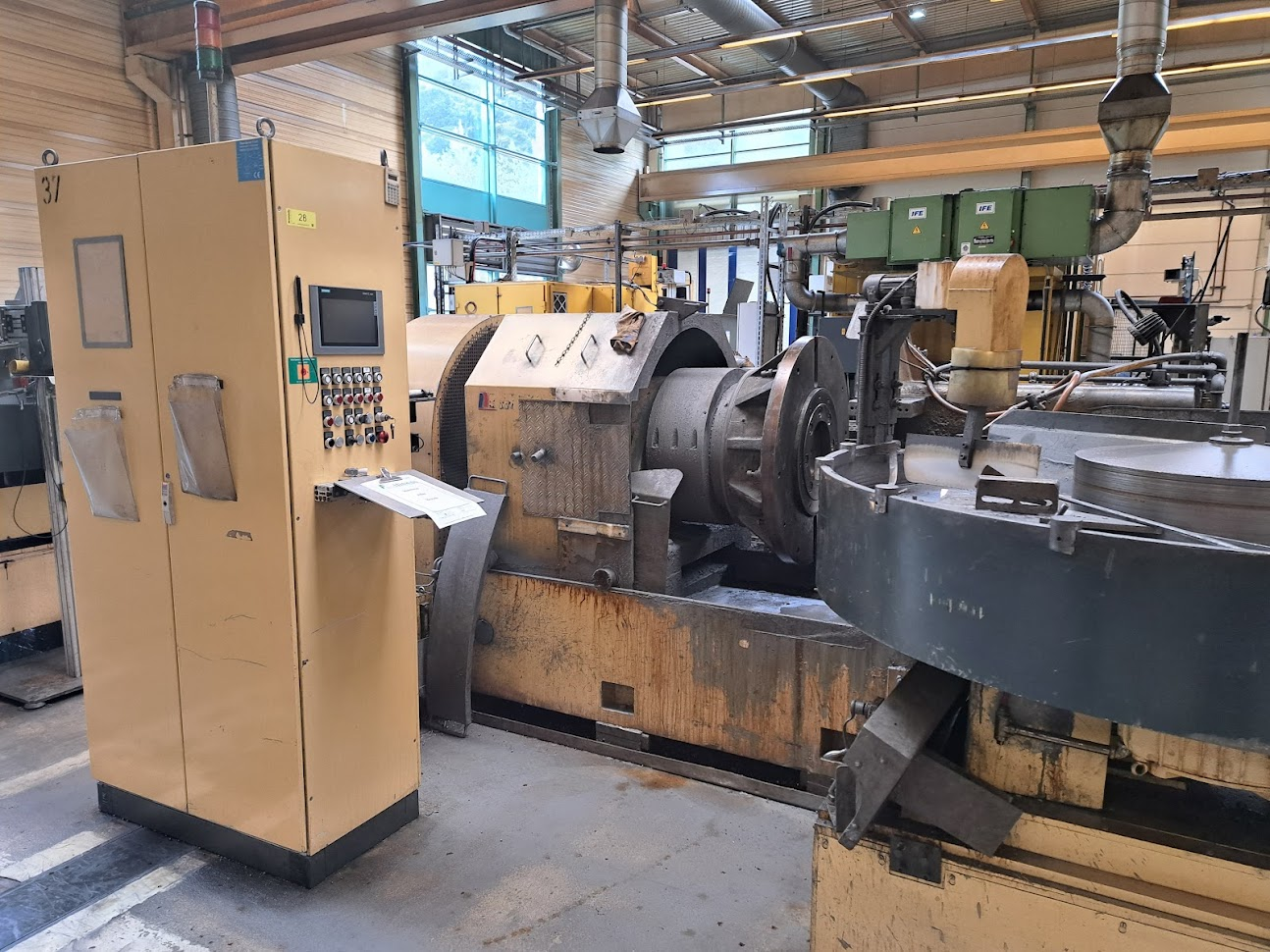
This is a heavy-duty industrial rotary mixing and processing machine designed for continuous or batch production in a foundry and metal-processing environment. The machine combines a large circular processing vessel, mechanically driven rotating equipment, paddle-based internal processing, hydraulic and mechanical drive components, industrial dust extraction, and a dedicated electrical control system. Its robust construction and production-oriented configuration make it suitable for demanding material-processing operations where controlled mixing, agitation, and consistent material preparation are required. The central section incorporates a large circular processing vessel with a heavy-duty rotating assembly and substantial working area. The vessel is designed to accommodate industrial quantities of material while the internal paddle mechanism provides the mechanical movement required to process and homogenize the material. The large-diameter construction, reinforced frame, and powerful drive arrangement are characteristic of equipment intended for high-volume industrial production rather than laboratory or light-duty applications. A major feature of the machine is its paddle-driven mixing system. The dedicated control panel includes clearly identified German operating functions for the main drive and paddle system, including controls associated with paddle movement, machine start/stop functions, magazine operation, auxiliary equipment, and fault indication. The paddle arrangement provides controlled mechanical agitation within the processing zone, allowing material to be moved, mixed, distributed, and processed consistently throughout the working cycle. The machine is integrated with an industrial dust extraction and ventilation system. Ducting is positioned directly above the processing area and connects the machine to external filtration/extraction equipment. This configuration is particularly important in foundry and metal-processing applications, where processing dry materials can generate dust and airborne particles. The extraction arrangement helps maintain a cleaner production environment while removing process-generated dust from the working area. The machine incorporates a substantial mechanical drive assembly with heavy-duty housings, rotating components, shafts, bearings, guards, and supporting structures. The main drive is positioned centrally within the machine architecture and transfers mechanical power to the processing mechanism. The reinforced construction provides stability during operation and is designed to withstand the mechanical loads associated with continuous industrial mixing and processing. A large electrical control cabinet is installed alongside the machine. The cabinet contains the machine's main control hardware, operator interface, push-button controls, selector switches, indicator lamps, emergency-stop equipment, and monitoring functions. A dedicated display/interface is provided for machine operation and production control, while the extensive array of individual controls allows the operator to manage different stages and auxiliary functions of the production cycle. The control system includes dedicated functions for the main drive, paddle operation, magazine operation, auxiliary equipment, automatic/manual functions, and machine status. The German-language control labels indicate that the machine was configured for operation within a German industrial production environment. Indicator lamps provide visual information about operating conditions, while emergency-stop and fault controls allow the machine to be safely stopped when required. The machine also features a material loading and handling arrangement, with the control system incorporating a dedicated magazine function. This allows the equipment to be integrated into a larger production workflow where material can be supplied to the processing area in a controlled sequence. Such an arrangement is useful for production environments requiring repeatable material charging and standardized processing cycles. The lower section of the machine contains substantial supporting structures and mechanical equipment, including drive components, housings, service access points, and associated hydraulic or lubrication equipment. The heavy fabricated base provides the necessary structural support for the processing vessel and rotating machinery. The overall construction is intended for industrial production environments where equipment is required to operate with significant mechanical loads over extended production periods. The machine is particularly suitable for foundry material preparation and industrial mixing applications, where consistent material properties are essential for subsequent manufacturing processes. Rotary and paddle-based mixing systems are commonly used where materials need to be thoroughly combined and conditioned before being transferred to the next production stage. The integrated extraction system further supports operation in environments where dry particulate material is handled. Its configuration allows the machine to function as part of a broader automated or semi-automated production line, with material handling, mixing, extraction, electrical control, and auxiliary equipment working together as one production system. The centralized operator controls provide direct access to the primary machine functions, while the surrounding infrastructure allows the equipment to connect with upstream and downstream production processes. The machine's heavy-duty construction, large processing capacity, paddle mixing mechanism, powerful drive arrangement, integrated dust extraction, extensive operator controls, and industrial material-handling configuration make it well suited to demanding manufacturing operations. It represents a substantial piece of production equipment intended for industrial-scale processing rather than general-purpose workshop use.